
Daily Real Estate Intelligence Report — 28 April 2026
The global and South African real estate markets are entering a defining phase in 2026—one that is less about explosive growth and more about strategic, sustainable expansion. After several years of volatility driven by high interest rates, inflation pressures, and economic uncertainty, the sector is now stabilizing. This shift is creating a more predictable environment for buyers, sellers, and investors, but it also demands sharper decision-making. The current cycle favors those who understand timing, location, and long-term value rather than short-term speculation.
Globally, real estate is transitioning into what many analysts describe as a “smart growth” era. Instead of rapid, uneven booms, markets are seeing moderate appreciation supported by real demand and constrained supply. Developers are becoming more disciplined, scaling back on speculative construction and focusing on high-demand segments such as residential housing, logistics, and mixed-use developments. As a result, existing properties—especially those in prime or well-connected locations—are becoming increasingly valuable due to limited new supply entering the market. At the upper end, luxury real estate is also evolving, with buyers prioritizing privacy, exclusivity, and lifestyle-enhancing features over sheer size or extravagance.
In South Africa, the outlook is notably optimistic. The property market is showing clear signs of recovery, supported by easing interest rates and improving consumer confidence. These factors are lowering the barrier to entry for many buyers, particularly in the residential sector. As financing becomes more accessible and property prices remain relatively realistic, activity is picking up across key segments. This environment is widely considered one of the most favorable for buyers in recent years, offering a rare combination of affordability, choice, and negotiating power.
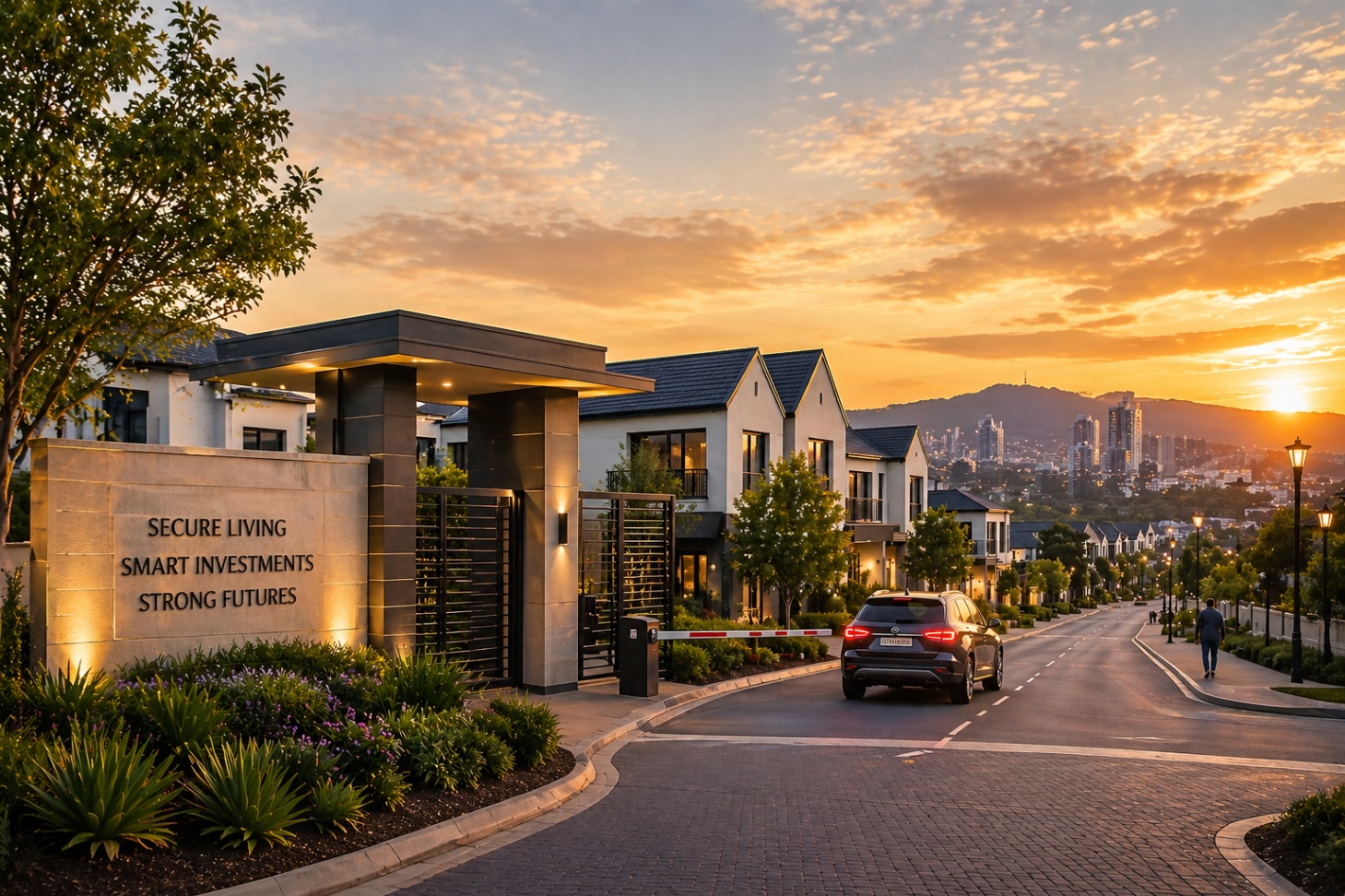
One of the most significant shifts shaping the market is the rise of younger and first-time buyers. Individuals under the age of 44 are increasingly dominating property transactions, signaling a generational transition in ownership patterns. This group is driving demand toward more practical and lifestyle-oriented housing options, including sectional title units, security estates, and mixed-use developments. Their preferences are reshaping the market, placing greater emphasis on affordability, safety, convenience, and community living. This trend is expected to intensify, influencing how developers design and position future projects.
At the same time, large-scale developments are reinforcing confidence in the sector. Projects such as multi-billion-rand smart cities and integrated residential estates are attracting strong interest, highlighting a growing appetite for future-ready living environments. These developments typically combine residential, commercial, and lifestyle elements, offering residents a more holistic living experience. Their success points to a broader shift toward urban planning that prioritizes efficiency, sustainability, and quality of life.
From an investment perspective, 2026 is shaping up to reward disciplined, long-term strategies. There is a noticeable move away from speculative investing toward assets that generate consistent income and demonstrate resilience. Residential and industrial properties are currently among the most attractive asset classes, while retail continues to adapt to changing consumer behavior. Investors are increasingly focused on fundamentals such as location, tenant stability, and infrastructure development, rather than chasing rapid capital appreciation.
However, the market is not without its risks. Policy changes, both locally and internationally, have the potential to influence property values and investor behavior. Additionally, while reduced construction activity is supporting price stability, it may also lead to supply shortages in high-demand areas, pushing prices upward over time. This makes market timing and asset selection more critical than ever.
Ultimately, the defining theme of 2026 is informed decision-making. The days of easy gains driven by market momentum are giving way to a more balanced landscape where success depends on insight, patience, and strategy. For buyers, this is an opportunity to enter the market under favorable conditions. For investors, it is a time to focus on quality assets with strong long-term potential. And for developers, it is a moment to align projects with the evolving needs of a new generation of property owners.